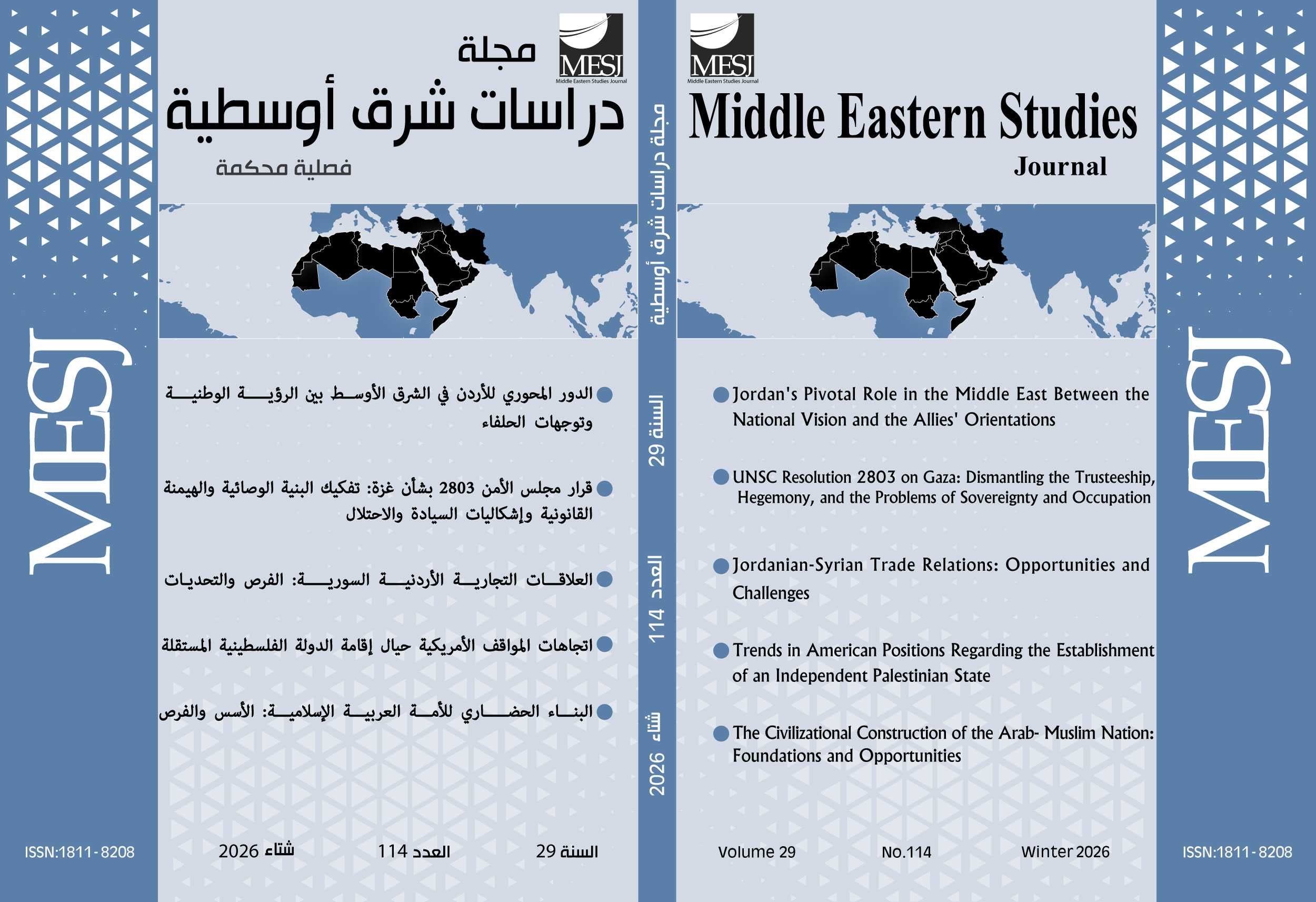
صدر حديثا: العدد 114 من مجلة دراسات شرق أوسطية
ضمن إصدارات مركز دراسات الشرق الأوسط/ الأردن وبالتعاون مع المؤسسة الأردنية للبحوث والمعلومات صدر العدد 114 من مجلة "دراسات شرق أوسطية" شتاء 2026، وعالج موضوعات وقضايا متعددة وراهنة على ساحة العالم العربي والشرق الأوسط. يتناول المقال الافتتاحي "الدور المحوري للأردنّ في الشرق الأوسط بين الرؤية الوطنيّة وتوجّهات الحلفاء"، والذي يهدف إلى تعزيز المقاربة السياسية والفكرية الأردنيّة التي انتهجتها المملكة بنظامها ومؤسساتها وقواها السياسية والاجتماعية خلال مائة عام من عمر الدولة، من خلال صناعة نموذج متقدّم في التوازن بين متطلبّات الخارج وضرورات الداخل الوطنيّ، والمحافظة على الثوابت والمصالح العليا، وتعزيز الاستقرار، وسدّ الباب أمام أي محاولات خارجية للعب بأمنه وسيادته. وتهدف الدراسة الأولى في العدد بعنوان "قرار مجلس الأمن 2803 بشأن غزة تفكيك البنية الوصائية والهيمنة القانونية وإشكاليات السيادة والاحتلال.. دراسة قانونية نقدية"، والتي أعدّها د. محمد خليل الموسى- الأردنَ، أستاذ فلسفة القانون، تحليل التحولات في موقع القانون الدولي وأدواته في إدارة النزاعات، ولا سيما في سياق القضية الفلسطينية، وترصد إشكالية القرار الذي يعيد تشكيل البيئة السياسية والأمنية في غزة عبر هندسة جديدة تُخضع الإقليم لإدارة دولية انتقالية تحت رعاية الأمم المتحدة، بحيث يُمنح "مجلس السلام" صلاحيات واسعة لإدارة الخدمات والمؤسسات، فيما تُمنح "قوة الاستقرار" تفويضاً مفتوحاً باستخدام "جميع التدابير اللازمة"، بما يفتح الباب أمام نموذج وصاية ذات طابع عسكري ويُنتج فراغاً في المساءلة القانونية ومجالاً محتملاً للإفلات من العقاب. وناقشت دراسة ""تداعيات الحرب الإسرائيلية- الأمريكية ضدّ إيران على العالم العربي"، التي أعدها د. قاصد محمود- الأردنّ، خبير في الشؤون الاستراتيجية العربية، قدرة حكومات العالم العربي على احتواء التداعيات السلبية للحرب عليه، بما يؤدي إلى انخفاض مستوى التهديد لاستقرار المنطقة وللأمن القومي العربي. وقد اعتمدت الدراسة على المنهج الوصفي- التحليلي ومنهج تحليل النظم، من خلال تحليل بيئة الحرب، ودوافع أطرافها، وتتبّع تداعياتها وسيناريوهات التعامل معها. وخلُصت الدراسة إلى أن هذه الحرب، إلى جانب تداعياتها، شكلت نموذجًا لخلق أزمة في العالم العربي. وقد ساهمت عوامل عديدة في تصعيد هذا التهديد لأمن المنطقة واستقرارها. ومن أهمها: 1) تردد الحكومات العربية في اتخاذ موقف حاسم، 2) انتهاك سيادة بعض الدول العربية أو تعريض مواطنيها للخطر، 3) تباين المواقف الرسمية بشأن تداعيات الحرب ونتائجها، 4) تزايد المخاوف العربية من هيمنة أحد الأطراف المتحاربة على المنطقة وتنفيذه لمخططاته لإعادة رسم خريطة الشرق الأوسط. في حين سعت دراسة "البناء الحضاريّ للأمّة العربية الإسلامية: الأسس والفرص"، التي أعدها د. عودة الجيوسي- الأردن، باحث في التنمية المستدامة والابتكار، إلى توضيح مدى إدارك الفكر العربي الإسلامي للفرص البارزة لتقديم بناء حضاري حديث ومتقدّم يخدم البشرية جميعاً، حيث تجري الدراسة عبر منهج وصفي تاريخي مقارن عملية مقارنة بين الأسس الفكرية لكلّ من الحضارة الإسلامية والحضارة الغربية. فيما تناولت الدراسة الأخيرة في باب البحوث والدراسات "اتجاهات المواقف الأمريكية حيال إقامة الدولة الفلسطينية المستقلة"، والتي أعدتها د. سوسن إسماعيل العساف- العراق، أستاذ العلوم السياسية/ جامعة النيل الأوروبية-لندن، وباحثة متعاونة مع مركز دراسات الشرق الأوسط/ الأردن. الدوافع المنشئة للمشاريع التي طرحتها الإدارات الأمريكية لإقامة الدولة الفلسطينية أو حل الدولتين، والتحديات التي واجهتها، سواء على الصعيد الإسرائيلي أو الفلسطيني- العربي أو الأمريكي- الدولي، وتوضّح كيف أنّ مسألة إقامة الدولة الفلسطينية المستقلة قد جرى التعامل معها غربياً وأمريكياً وإسرائيلياً حتى اُفرِغَت من مضمونها، وتقلصت مساحة الأراضي الفلسطينية المخصصة لها منذ قرار التقسيم عام 1947 رقم (181). كما احتوى العدد في باب التحليلات والتقارير على تحليل حول "العلاقات التجارية الأردنية السورية: الفرص والتحديات". واختتُم بمراجعة كتاب حول ""الأحزاب السياسية الأردنية: الواقع والطموح"" في باب مراجعات الكتب. ومجلة دراسات شرق أوسطية مجلة دورية فصلية محكمة متخصصة في مجالات التحول القصيرة التي لا تستوعبها الدراسات والبحوث الطويلة، وقد صدر منها حتى شتاء 2026 (114) عدد، ويقع العدد الأخير هذا في (200) صفحة، وثمنه (3JD) داخل الأردنّ، و(5$) خارج الأردنّ.
لتصفح المحتوى اضغط هنا