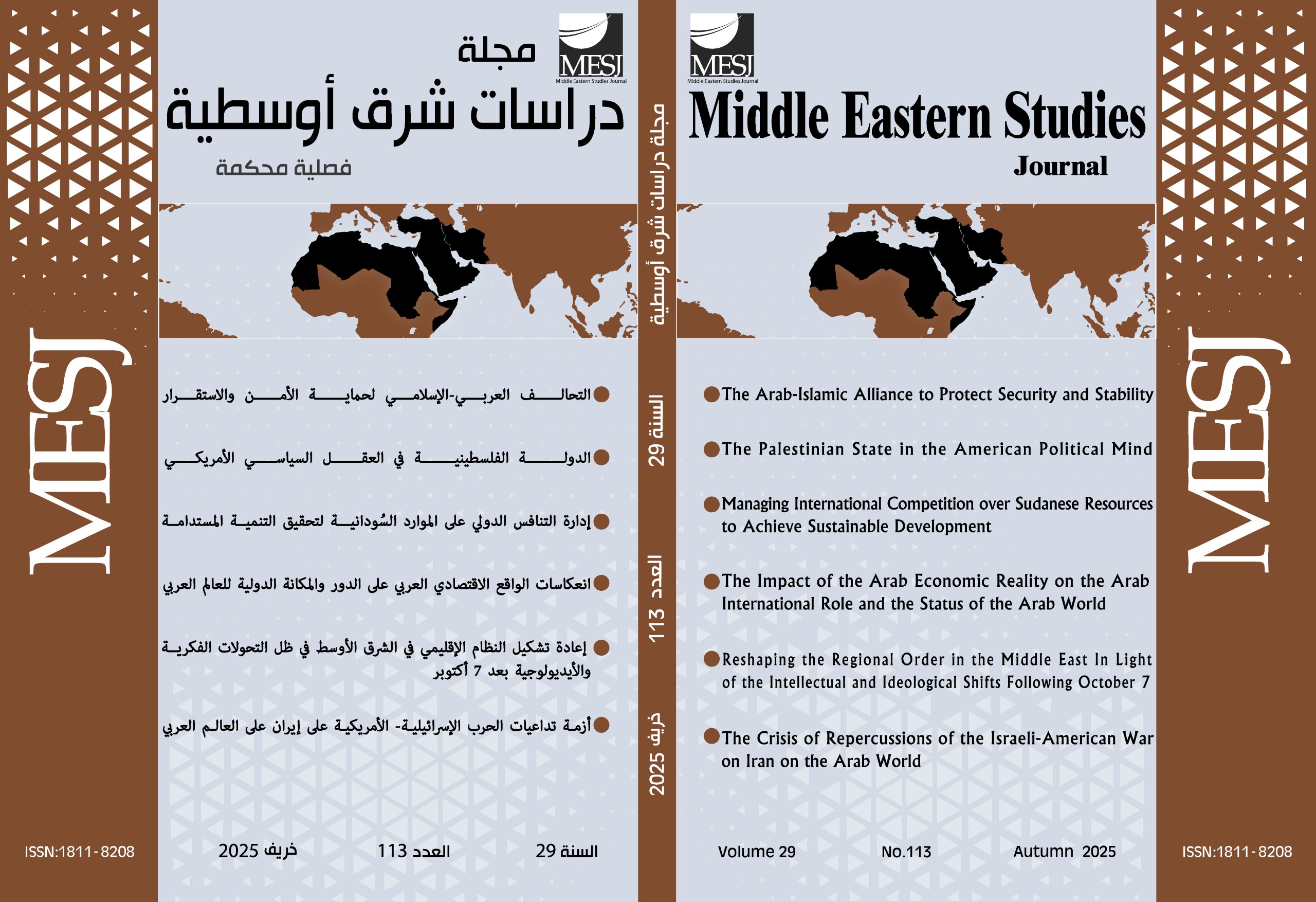
صدر حديثا: العدد 113 من مجلة دراسات شرق أوسطية
ضمن إصدارات مركز دراسات الشرق الأوسط/ الأردن وبالتعاون مع المؤسسة الأردنية للبحوث والمعلومات صدر العدد 113 من مجلة "دراسات شرق أوسطية" خريف 2025، وعالج موضوعات وقضايا متعددة وراهنة على ساحة العالم العربي والشرق الأوسط. يتناول المقال الافتتاحي "التحالف العربي- الإسلامي لحماية الأمن والاستقرار"، بالبحث والتمحيص الفكرة التي يجري تداولها بين القيادات العربية والإسلامية والتي بدأت بعض نتائجها تتحول إلى اتفاقات دفاعية واستراتيجية بين بعض الدول ثنائياً، والتي تهدف بمجموعها إلى تحقيق الأمن وحماية الاستقرار في العالم العربي وجواره الإسلامي، لا سيما بعد تصاعد التهديدات والمخاطر من قبل إسرائيل، وتوجيهها ضربات واسعة النطاق ومتفرقة جغرافياً ضدّ الدول العربية والإسلامية، وقد كشفت هذه الهجمات عن حقيقة المخاطر الوجودية والسيادية القائمة، والتي تشكّل تهديدات أمنية حقيقية، وتؤسس لحالة من عدم الاستقرار طويل الأمد في المنطقة، كما أنها ستمنح إسرائيل اليد الطولى لفرض هيمنتها على المنطقة بالقوة والتهديد والعنف، غير آبهة بالقرارات والمواثيق الدولية. وتهدف الدراسة الأولى في العدد بعنوان "الدولة الفلسطينية في العقل السياسي الأمريكيّ"، والتي أعدّها الدكتور عمر رحّال- أستاذ علم الاجتماعي السياسي من فلسطين، إلى تحليل التناقض الصارخ بين الخطاب الأمريكي المعلن الداعم لحل الدولتين كوسيلة لحل الصراع الإسرائيلي الفلسطيني، والسياسات الفعلية التي تنفذها واشنطن والتي تعرقل هذا الحل بشكل منهجي. يتجلى هذا التناقض في الدبلوماسية الأمريكية، واستخدام حق النقض في مجلس الأمن، وفرض شروط تفاوضية متحيزة لصالح إسرائيل باستمرار. وناقش بحث "إدارة التنافس الدوليّ على الموارد السُودانية لتحقيق التنمية المستدامة"، والذي أعده الأستاذ محمد أبو بكر محمود- باحث في العلاقات الدولية والسياسة الخارجية من السودان، السياسة الخارجية السودانية في ظل التحولات الراهنة باعتبارها محوراً استراتيجياً لإدارة التنافس الدولي على الموارد، مع التركيز على الأبعاد الجيوسياسية والجيو- أمنية التي تؤثر على موقع السودان في الساحة الإقليمية والدولية. كما سلط الضوء على التحديات والفرص التي تواجه السودان، خاصة في سياق التنافس الدولي والإقليمي، وأهمية تعزيز الشراكات الاستراتيجية لتحقيق التنمية المستدامة والاستقرار السياسي. وقد اعتمد البحث استراتيجية "الجسر والمورد" كمفهوم محوري، مما يعزز دور السودان كحلقة وصل استراتيجية بين القوى الدولية والدول المجاورة. تُمكّن هذه الاستراتيجية السودان من الاستغلال الأمثل لموارده الطبيعية وموقعه الجغرافي في ظل التنافس الدولي. ويقدم البحث في نهاية المطاف رؤية متكاملة لإدارة التحديات الجيوسياسية والجيوأمنية. تجمع هذه الرؤية بين الأطر النظرية للعلاقات الدولية والنهج الدبلوماسي، وتُوازن هذه الأداة المُركّبة بين المصالح الوطنية والتكامل الإقليمي لتعظيم الاستفادة من موقع السودان الجغرافي وموارده. في حين سعت دراسة "انعكاسات الواقع الاقتصادي العربي على الدور والمكانة الدولية للعالم العربي"، التي أعدّها كلّ من أستاذ العلوم المالية العامة في كلية الدراسات العليا في الجامعة العربية الأمريكية وجامعة بيرزيت، ومدير عام مؤسسة كفاءة للاستشارات المالية الدكتور نصر عبد الكريم- فلسطين، والباحثة الاقتصادية والاجتماعية وعضو جمعية الاقتصاديين الفلسطينيين الأستاذة إخلاص طملية- فلسطين، سعت إلى مقاربة تحليلية معمّقة للواقع الاقتصادي في الدول العربية خلال العقدين الأخيرين، في سياق ما يشهده النظام الدولي من تحوّلات بنيوية على الصعيدين الاقتصادي والجيوسياسي. وتنطلق الدراسة من فرضية مركزية مفادها أن تباين المسارات التنموية بين الدول العربية، وانكشاف معظمها على صدمات خارجية، قد حال دون بناء قاعدة إنتاجية قادرة على تمكين موقعها في النظام العالمي. فيما تناول البحث الأخير في باب البحوث والدراسات "إعادة تشكيل النظام الإقليمي في الشرق الأوسط في ظل التحولات الفكرية والأيديولوجية بعد 7 أكتوبر"، والذي قدمته الدكتورة ديمة فايق أبو لطيفة من فلسطين، قسم العلوم الشرطية/ كلية القانون- جامعة الاستقلال/ فلسطين. حيث تناول تأثير الفكر السياسي الإسلامي والأيديولوجيات العابرة للحدود الوطنية في إعادة تشكيل النظام الإقليمي من خلال تحليل الخطاب العقائدي والسياسي لهذه الحركات، وتحديداً التموضع الجيوسياسي الجديد لجماعات مثل حماس وحزب الله وأنصار الله (المعروفين أيضاً باسم الحوثيين). وقد اعتمد البحث نهجاً متعدد المناهج، يجمع بين التحليل الوصفي، وتحليل الخطاب، والأساليب المقارنة، والتفسير البنيوي الأيديولوجي، إلى جانب دراسات الحالة التطبيقية. وقد اختتُم العدد بتحليل حول "أزمة تداعيات الحرب الإسرائيلية- الأمريكية على إيران على العالم العربي". ومجلة دراسات شرق أوسطية مجلة دورية فصلية محكمة متخصصة في مجالات التحول القصيرة التي لا تستوعبها الدراسات والبحوث الطويلة، وقد صدر منها حتى خريف 2025 (113) عدد، ويقع العدد الأخير هذا في (208) صفحة، وثمنه (3JD) داخل الأردنّ، و(5$) خارج الأردنّ.